
Drive unit repair
The whole unit, not a reman swap: bearings, shafts, seals and the differential, with the failure explained.
When to have it looked at
- A hum that appears under load and gets worse each month.
- Rattle from the halfshafts, or a clunk on the change of direction.
- Insulation fault codes on a car that drives normally.
Why it fails
The seal between the cooling circuit and the rotor is a wear part, and thermal cycling, regenerative braking and long periods parked all shorten its life. Once coolant is past it the sequence is always the same: no symptoms, then insulation codes, then a hum, then contaminated bearings and stator, and finally a destroyed inverter and a locked pack.
How we work
- We record the condition in writing before anything is opened, and you get a copy.
- The unit is stripped and inspected. It is the only way to know the real state of it.
- Everything that matters is measured, not estimated.
- You get a written quote before any repair starts. Nothing proceeds without your agreement.
- We replace what has actually failed and what will fail next, not the whole assembly.
- It is tested under load and returned to you with the findings written up.
What decides the price
What moves the price is the platform, what we find once it is open — which nobody can know beforehand — and whether the original parts can be reused. That is why the quote comes after the inspection and not before it.
Turnaround, warranty and whether a teardown is chargeable are set by this workshop. Ask us before you commit.
Bearings and shaft seals: the two faults that are mistaken for a dead motor
Most drive units that arrive described as a motor failure have a sound motor. What has failed is a bearing or a seal, and both are repairable — but both are diagnosed as the whole unit by anybody who cannot open it.
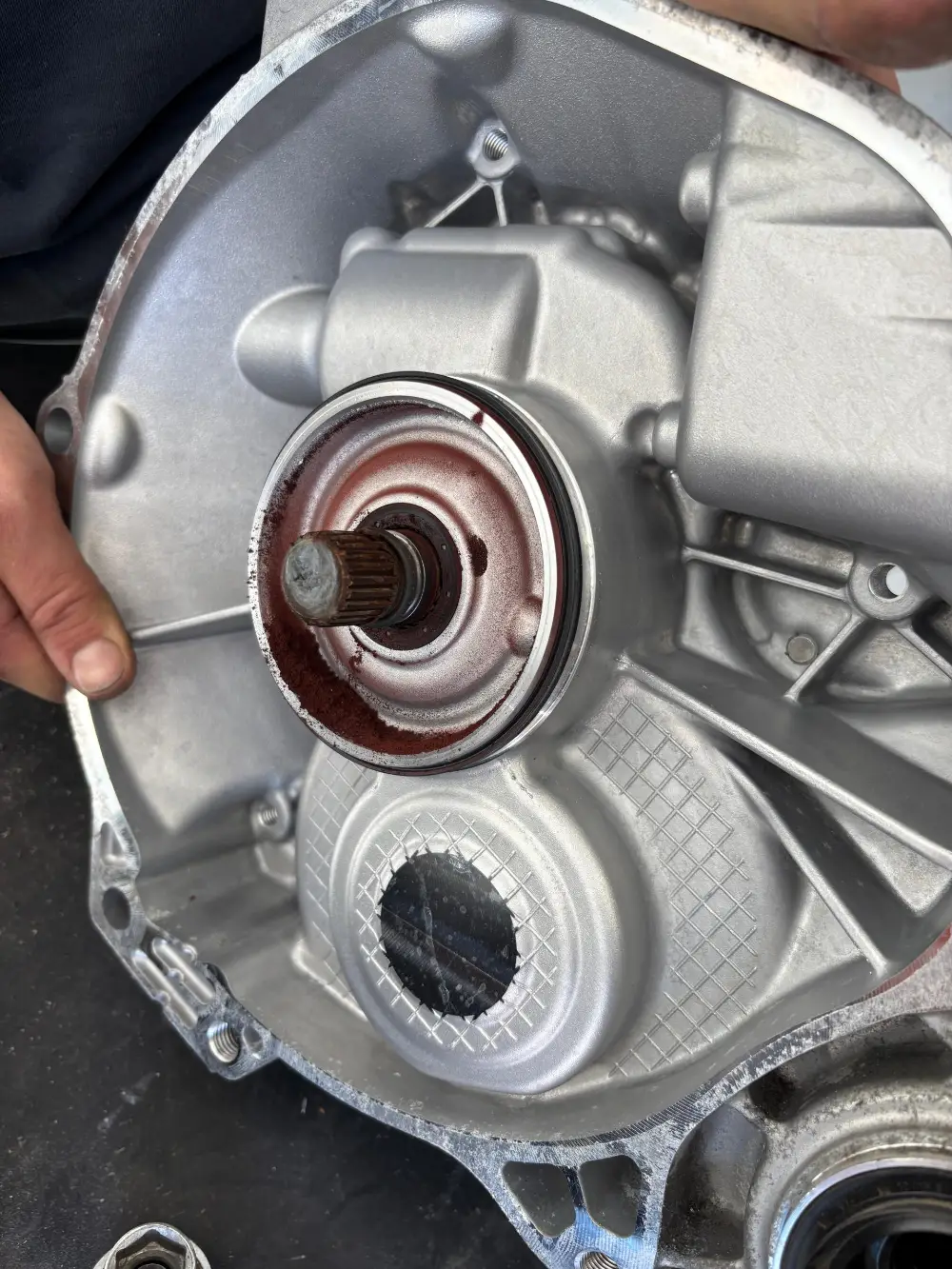
Renault Zoe and Smart EQ: the bearings
Weather and ordinary wear take the bearings out over time. The car gets progressively louder, then vibrates. The motor itself is not defective, but worn bearings disturb the rotor position sensor, and the codes that produces make it look as though it is. The same motor is fitted in the Smart EQ (453), and it fails the same way.
- Loud humming or whistling from the motor compartment.
- Vibration you can feel while driving.
- Rotor position sensor codes, which point at the sensor rather than at the bearings behind it.
Why the workshop replaces the whole motor
The manufacturer offers no repair for the bearings or the sensor, so a franchised workshop exchanges the complete motor. Technically all that is needed is a set of bearings and, where the sensor has suffered, the sensor. Getting at them means taking the motor out and apart, which is demanding work — and still the cheaper and more durable answer.
Tesla Model S and X: the shaft seal
On the large drive unit the factory shaft seal is not built for high mileage. Running against the rotor shaft it scores a groove over the years, the seal stops sealing, and coolant reaches the inside of the motor housing. What follows is moisture in the winding, an insulation fault, and damage to the bearing, the stator and the inverter in that order.
- A low external insulation reading.
- Noise from the drive, or a loss of power.
- The car declaring itself not ready to drive.
What the repair consists of
- A seal made for the job, which does not cut a fresh groove into the shaft.
- The rotor shaft machined where the old seal has already marked it.
- Windings dried and cleaned before anything is closed up.
- New bearings, and the rotor position sensor where it has been affected.
Fault codes on this page
DF030DTC0841F3DI_u029DI_f072
What we have written about this
- The Audi e-tron €15,000 Motor Disease — APA250 Front & AKA320 Rear Drive Unit Failure Explained evclinic.eu
- To all Tesla owners considering an LDU repair 🤯 please read this carefully before you make a decision that you cannot reverse. They want to censor EV Clinic. evclinic.eu
- Front Drive and Rear eDrive Unit Failure – Mercedes EQC evclinic.eu
- Volvo Hybrid XC60 ERAD Disaster evclinic.eu
- Tesla LDU “coolant delete” fatal failures evclinic.eu
- EQC ZF eDrive repetative failure – SiC seal wrong technology evclinic.eu
Book Drive unit repair, or ask us about it first.