
DC/DC converter
No 12 V, no car. Converters repaired rather than replaced, with the reason it failed written down.
When to have it looked at
- The 12 V battery goes flat repeatedly with nothing else wrong.
- Warning lights everywhere at once, then the car shuts down.
- The car drives, but will not restart after it has been left standing.
Why it fails
The converter is what keeps the 12 V system alive from the traction pack. When it goes, everything that runs off 12 V starts failing at once and the symptoms look like ten faults rather than one. It is a repairable board, and it is almost always sold as an assembly.
How we work
- We record the condition in writing before anything is opened, and you get a copy.
- The unit is stripped and inspected. It is the only way to know the real state of it.
- Everything that matters is measured, not estimated.
- You get a written quote before any repair starts. Nothing proceeds without your agreement.
- We replace what has actually failed and what will fail next, not the whole assembly.
- It is tested under load and returned to you with the findings written up.
What decides the price
What moves the price is the platform, what we find once it is open — which nobody can know beforehand — and whether the original parts can be reused. That is why the quote comes after the inspection and not before it.
Turnaround, warranty and whether a teardown is chargeable are set by this workshop. Ask us before you commit.
Smart EQ (453): the converter that stops the car
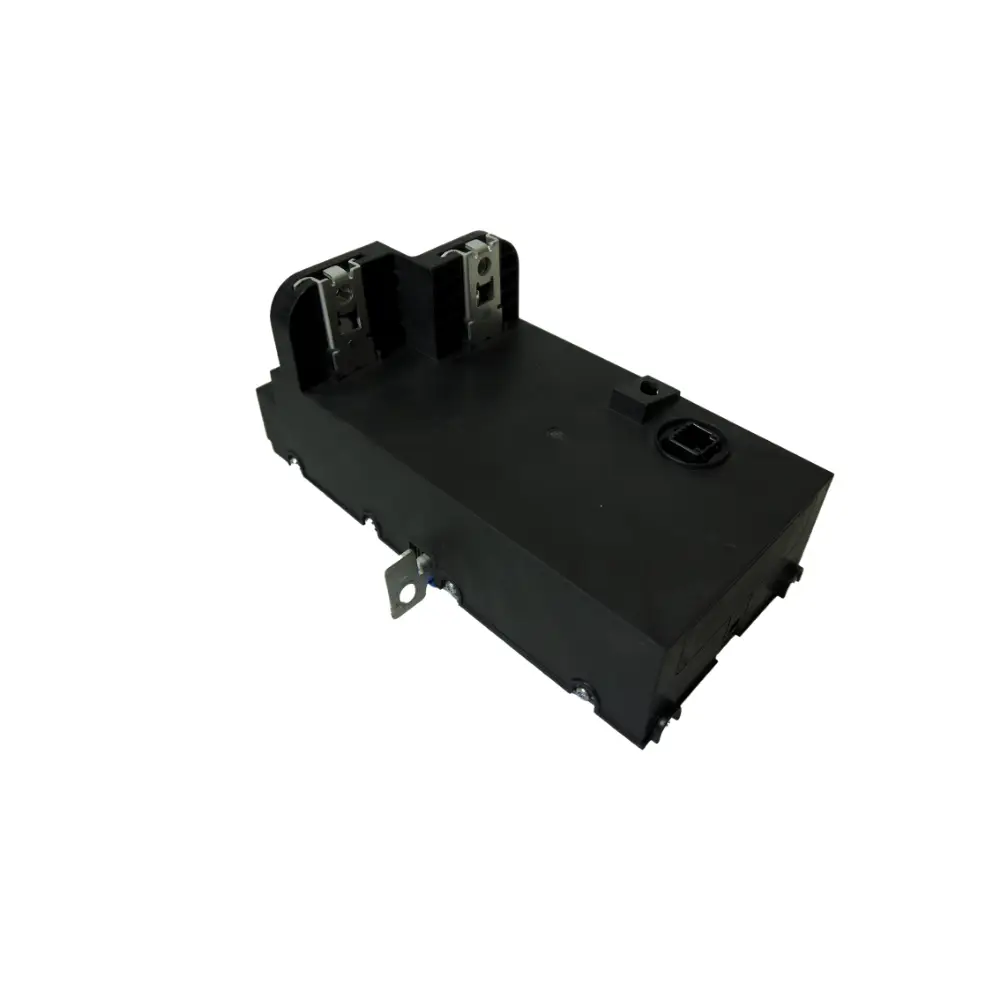
The DC/DC converter steps the pack's 360–400 V down to a stable 12 V. Without 12 V nothing runs at all: no control units, no charging, no high-voltage release, no Ready. When the converter weakens the car does not limp — it stands still.
What the driver sees
- Charging breaks off, or never starts.
- Warnings to check the 12 V system, that drive is not possible, or to stop the vehicle immediately.
- The 12 V battery drains and the car is dead after standing a short while.
- No high-voltage release, no contactor click, no Ready mode.
Why it fails
The converter carries one to two kilowatts continuously, in poor conditions, while absorbing swings in the low-voltage system that last milliseconds. A single weak diode or one aged capacitor is enough to make the whole high-voltage release fail.
- Thermal ageing and overheated components.
- Cold solder joints — the classic inverter fault.
- Moisture finding its way into the housing.
- Overload from an ageing or already failed 12 V battery.
The 12 V battery is part of the fault
The manufacturer prescribes replacing the 12 V battery every three years, and that is not arbitrary: the factory battery loses capacity early. A weak 12 V block puts the converter under more load every time the car wakes up. A good AGM battery takes high charging currents better, holds the low-voltage rail steadier and cycles the converter less. Cars running a good AGM show noticeably fewer converter failures and charging faults.
Spare parts are the problem
Original converters are effectively unavailable, with quoted delivery running more than a year out. Testing and overhauling the unit already in the car is not a workaround for that; at present it is the only route.
What that means in the workshop
- The converter is tested out of the car: high-voltage simulation, a 12 V load test and voltage analysis.
- A unit can be sent in and overhauled, or exchanged, without the car.
- Where it is not yet certain the converter is the fault, the 12 V system and its consumers are checked first.
One safety note
Failed converters have been found with thermal damage. A unit showing burn marks is not overhauled and refitted until it is clear why it got hot.
Fault codes on this page
P0852F1P085249P085296
Vehicles this applies to
Smart EQ (453), 2017–2022
What we have written about this
- Electric EQ453 (2017-2022) – DCDC Inverter defect evclinic.eu
- DCDCBOX assebly evclinic.eu
- EVC DCDCBox- Assembly Manual evclinic.eu
Related parts and services in the shop
Book DC/DC converter, or ask us about it first.